Brain Test 3: Tricky Quests
- 4.7
- Rating
- 10.00M
- Installs
- Free
- Price

 Analysis by App-foxy
I approached Brain Test 3: Tricky Quests expecting a light trivia game, but its appeal is less about recalling facts and more about noticing what the screen is quietly asking me to do. It belongs to the puzzle-and-trivia space, and Unico Studio has built it as a longer adventure rather than a collection of disconnected questions. That difference matters: I am not simply answering one prompt after another, but working through situations that reward patience, experimentation, and a willingness to challenge the obvious answer.
The game is free to start and rated for Everyone, which makes it easy to recommend for casual players, families, and anyone who wants short mental challenges without committing to a large action game. It has also reached over 10 million installs, with a 4.7 average from around 382 thousand ratings and about 2.1 thousand written reviews. Those figures suggest that the basic idea has connected with a broad audience, although popularity alone does not tell me whether the style will suit every player.
How Brain Test 3 feels in everyday play
I find the everyday appeal of Brain Test 3 comes from how little setup each challenge needs: I can open it, focus on one screen, and decide whether to keep going after I see how the puzzle responds. That makes it easy to fit around a commute or a short break, while also making it worth noticing which kinds of feedback keep me curious.
You May Also Like

 Pandora - Music & Podcasts
Pandora’s Music Is Easy to Start, but Harder to Recover
Pandora’s strength is its low-effort path from a seed to a station. Its weak spot is how much confidence it asks you to place in connection, setup, and quiet recovery.

 8 Ball Pool
 Is Built on Rivalries, Rematches, and Routine
A close look at the rivalries, rematches, shared routines, and unanswered safety questions that turn a quick pool match into a persistent mobile community.

 Samsung Music
’s Quiet Strength Is Playing What You Already Own
Its reach comes less from spectacle than from dependable access to a personal library. That simplicity is both the app’s strongest retention engine and its ceiling.

 AccuWeather: Weather Radar
AccuWeather Review: A Quick, Clear Forecast for Everyday Decisions
For everyday plans, the best forecast is the one you can understand quickly. AccuWeather makes rain timing, radar, and local conditions easy to act on, with a few trade-offs.

 Hill Climb Racing
Why Hill Climb Racing Still Turns Crashes Into One More Run
A tiny car, a bumpy hill and one more upgrade: Hill Climb Racing keeps resurfacing because its simple chaos makes every near-miss feel personal.

 AliExpress - Shopping App
AliExpress Makes Global Shopping Feel Personal, but Shoppers Bear the Risk
AliExpress turns a global marketplace into a pocket-sized discovery engine. Its reach is useful, its shopping loop compelling, and its trade-offs easy to miss.
More From Our News Desk
View All News


A quick game that asks me to slow down
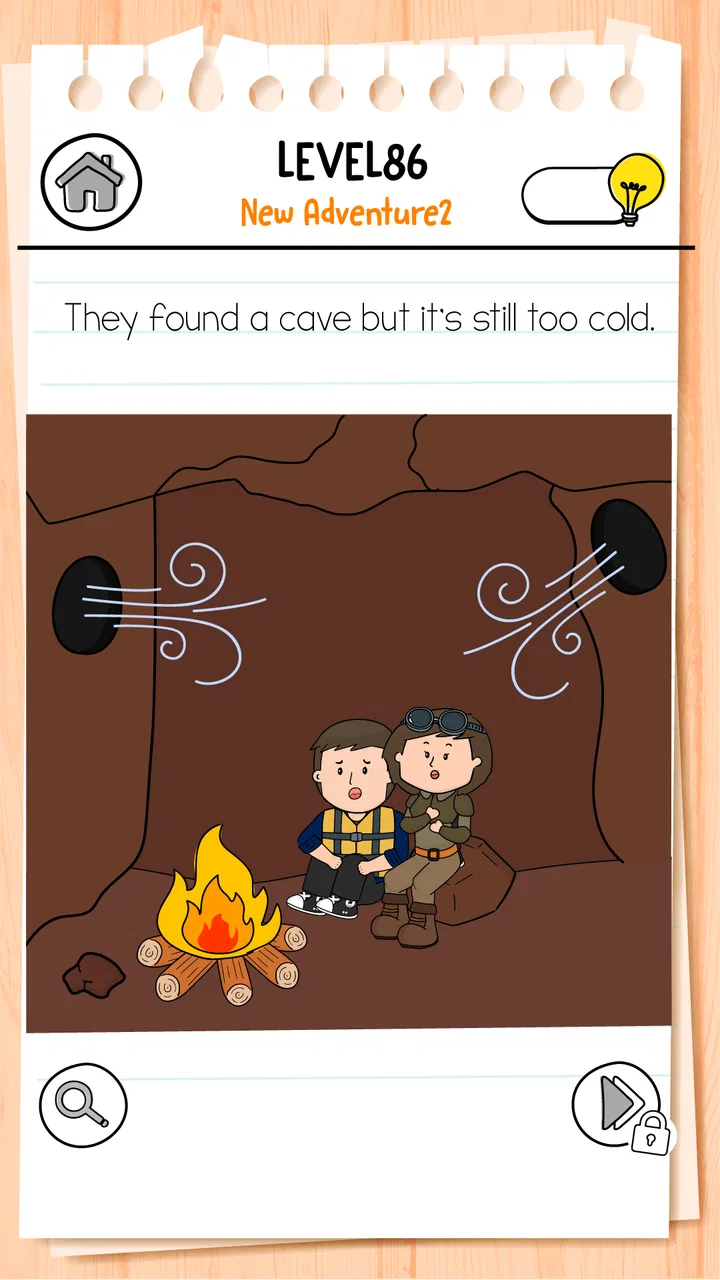
The first thing I noticed is the contrast between the simple presentation and the way the puzzles are framed. The game looks approachable, but the intended solution is often not the first action I would normally try. A prompt may appear to ask for a straightforward answer while the real challenge is hidden in the wording, the arrangement of objects, or the way I interact with the scene. That makes each attempt feel more like a small investigation than a standard quiz response.
For speed expectations, this is a good fit for brief sessions. I can open it when I have a few spare minutes, solve a handful of challenges, and stop without losing the feeling that I made progress. It does not demand the long concentration block of a traditional adventure game. At the same time, the individual puzzles can interrupt that quick rhythm when I get stuck, so the actual session length depends more on my patience than on the game itself.
On a reasonably modern phone, the general experience feels suited to casual play rather than high-end hardware. The visual style is deliberately playful instead of technically ambitious, and that works in its favor when I want something that gets to the point. I would not choose it to test a device’s graphics performance, but I also would not expect the kind of heavy rendering associated with a large 3D title. The current version is 1.77.2, and the listed minimum operating system is Android 7.0, giving it a relatively broad starting point for Android users.
Why the adventure format changes the experience
The longer quest structure gives the puzzles more context than a typical endless trivia feed. I am encouraged to think about what a situation means, not just whether I know a fact. This helps the game feel more memorable, because a successful solution often comes from understanding the scene rather than recalling information from school or general knowledge.
That structure is also one of the game’s main trade-offs. Players who enjoy a clear sequence of increasingly strange challenges will probably appreciate the sense of movement. Players who prefer a clean score screen, timed rounds, or a large bank of conventional questions may find the format less satisfying. In my view, calling it trivia is accurate only in a broad sense; the stronger identity is a humorous, interactive brain teaser with an adventure wrapper.
What happens when I use it heavily
During a longer session, the main demand is mental rather than technical. I spend more energy testing assumptions than watching complex animation or managing a detailed inventory. That makes it comfortable for repeated short bursts, but extended play can expose a different weakness: once I have been solving similar trick patterns for a while, I become more likely to tap randomly or overthink an easy interaction.
My practical advice is to treat the game as a series of small sessions. If a puzzle has stopped feeling clever and started feeling opaque, leaving it for later is often better than repeatedly trying the same interpretation. This is one of the less obvious strengths of the format: because the challenges are compact, taking a break does not feel like abandoning a major campaign. I can return with a fresh view and sometimes notice the intended clue immediately.
Heavy use may also make the free-to-play structure more noticeable. The game includes in-app purchases priced from $0.99 to $6.99 per item. I would not approach it expecting every part of the experience to be completely separate from optional spending. For a casual player, the free entry point is useful, but anyone who dislikes hints, interruptions, or purchase prompts in puzzle games should pay attention to how those moments affect their enjoyment before settling in for long sessions.
Hints are helpful, but they change the satisfaction of solving
One of the most important decisions in a tricky puzzle game is when to ask for help. A hint can save time, especially when I understand the general idea but miss one small interaction. However, using help too quickly can remove the best part of the game: the moment when an apparently silly solution suddenly makes sense.
I recommend giving each challenge a deliberate first pass. I read the wording again, inspect the whole screen, and try to identify anything that looks unusually placed before seeking assistance. This is more effective than tapping every object without a plan. It also reduces the chance that I will mistake a temporary lack of attention for a genuinely difficult puzzle.
There is a useful trade-off here for families. Younger players can receive enough support to keep moving, while adults can agree to solve each challenge without hints first. The Everyone rating makes the game broadly accessible, but accessibility does not mean every puzzle will be equally easy for every age. Children may enjoy the humor and surprise, while older players may be better at spotting language tricks. Playing together can turn a frustrating screen into a conversation rather than a dead end.
Reliability and recovery after interruptions
For a game built around short challenges, recovery matters almost as much as raw speed. I want to be able to pause when a message arrives, switch tasks, and come back without feeling that the whole session has been wasted. Brain Test 3: Tricky Quests is naturally suited to this kind of stop-and-start use because its progress is divided into compact scenarios rather than one uninterrupted match.
That makes it practical for everyday situations such as waiting for a train, taking a break between classes, or filling a few quiet minutes while dinner is cooking. I can attempt one puzzle without needing to reserve a full hour. If I am interrupted halfway through thinking, the challenge itself remains small enough that I can usually reconstruct what I was trying when I return.
I still prefer to close the game normally rather than treating it as something to leave running indefinitely. That is sensible for any mobile game, especially on an older device. I would also keep the operating system reasonably current within the supported range, since compatibility is part of the overall experience even when the game itself is not demanding. The broad Android requirement helps, but an older phone can still behave differently from a newer one because of storage pressure, background activity, or battery condition.
My reliability judgement is therefore practical rather than absolute: this is the kind of game whose small, self-contained tasks make interruptions less painful. It is not a productivity tool that needs constant state management, and it does not rely on a competitive live session where leaving at the wrong moment ruins the experience. That is a meaningful advantage for mobile play.
Device constraints and resource expectations
The listed Android requirement starts at version 7.0, so the game is not restricted to only the newest phones. That does not guarantee identical performance on every supported device, but it does make the title more approachable for people using older Android hardware. The modest visual direction also suggests that the game’s appeal is not built around demanding graphics.
On a device with limited free space or a tired battery, I would still avoid assuming that any game is cost-free to run. Keeping other apps active, using an aging phone, or playing while the device is already warm can affect responsiveness in ways that are not specific to this title. My sensible routine would be to close unnecessary background apps, keep some storage available, and avoid judging the game after launching it during an unusually busy moment on the phone.
For players who are especially sensitive to resource use, this game has a clear advantage over visually intensive alternatives: its central appeal comes from puzzle logic, not elaborate 3D environments. That said, the right comparison is not “lightweight versus impossible to run.” A very old or heavily burdened device may still offer a less comfortable experience, while a newer phone should have little reason to struggle with the basic presentation.
How it compares with ordinary trivia games
Traditional trivia apps usually test knowledge through multiple-choice questions, categories, timers, streaks, or leaderboards. They are a better choice when I want to measure what I know, compete with friends, or focus on a subject such as history, sport, or science. Brain Test 3 takes a different route. It tests observation and lateral thinking more than stored knowledge, so I can enjoy it even when I am not in the mood for a conventional quiz.
Compared with a pure puzzle app, its advantage is personality and progression. The adventure framing gives the challenges a reason to sit together, and the unusual prompts create a more playful tone. The downside is that the solutions can sometimes feel arbitrary if I have not recognized the designer’s intended trick. In a logic-puzzle app with formal rules, I can usually explain why an answer is correct. Here, part of the fun comes from accepting that the game wants me to think sideways.
It is also different from a word game. A word-focused alternative may be better for someone who wants vocabulary practice or a predictable daily routine. Brain Test 3 is more visual and situational, making it preferable when I want a surprise in each challenge rather than a repeatable letter-based system.
Who will get the most from it
I would recommend this game to players who enjoy playful misdirection, short challenges, and the satisfaction of discovering an unexpected interaction. It works particularly well for people who like discussing solutions with someone else, because explaining why a puzzle fooled me can be almost as entertaining as solving it. Families may also find it useful as a shared screen activity, provided everyone is comfortable with occasional frustration and optional purchases.
It is less suitable for someone who needs precise rules, consistent difficulty, or a calm, predictable progression. If I want a serious knowledge test, a competitive quiz, or a puzzle system where every answer follows formal logic, another category would serve me better. I would also skip it if I strongly dislike hint systems or any free-to-play friction, since those elements can matter more during extended play than during a quick trial.
A realistic use case is a short commute with unreliable attention. I can play one challenge, put the phone away when I arrive, and return later without needing to remember a complicated control scheme. Another is a relaxed evening with a friend: one person reads the prompt, the other suggests odd possibilities, and both compare whether the screen is hiding an obvious clue. Those situations match the game’s strengths better than a marathon session aimed at finishing everything in one sitting.
My performance verdict
Brain Test 3: Tricky Quests succeeds because it keeps its technical demands secondary to its central idea: make me question the obvious. The simple presentation supports quick loading expectations and broad device access, while the compact challenges make recovery from interruptions relatively painless. I would still keep normal mobile habits in mind on older hardware, but nothing about its design suggests that I need a gaming phone to appreciate it.
The more important limitation is not speed or device power. It is the subjective boundary between clever and arbitrary. When the intended interaction clicks, the game is charming and rewarding. When it does not, I may feel that I am guessing the developer’s thought process rather than solving a fair puzzle. Taking breaks, examining the full screen, and delaying hints helps preserve the enjoyable side of that balance.
Unico Studio has made a free trivia adventure that is easy to sample, broad in age appeal, and well suited to short mobile sessions. The current release is version 1.77.2, and the game remains free to download, with optional items available from $0.99 to $6.99. My final recommendation is positive for casual puzzle fans who want humor and surprise instead of a standard question bank. I would choose a conventional quiz for factual competition, but when I want a quick mental detour that rewards looking at a problem from the wrong angle, this is a strong pick.
My bottom line: choose it for compact, playful brain teasers and an adventure-like flow; skip it if you need strict logic, serious trivia, or a completely friction-free free-to-play experience.
FAQs for Brain Test 3: Tricky Quests
01What is Brain Test 3: Tricky Quests all about?
Brain Test 3: Tricky Quests is the latest installment in the popular Brain Test series, offering a mixture of challenging puzzles and brain teasers. The game combines logic, creativity, and problem-solving skills as players navigate through various tricky quests. Each level presents unique challenges that require you to think outside the box, making it a fun and engaging experience.
02Is Brain Test 3 suitable for all age groups?
Yes, Brain Test 3: Tricky Quests is designed to be accessible to players of all ages. Its puzzles vary in difficulty, ensuring that both children and adults can enjoy the game. The intuitive interface and playful graphics make it appealing to younger players, while the complex puzzles provide a satisfying challenge for older users.
03Does Brain Test 3 require an internet connection to play?
Brain Test 3: Tricky Quests can be played offline, allowing you to enjoy the game without an internet connection. However, certain features, such as updates and additional content, may require you to connect online. Playing offline is a convenient option for users who want to enjoy the game on-the-go.
04Are there any in-app purchases in Brain Test 3?
Yes, Brain Test 3: Tricky Quests offers in-app purchases. These typically include hints, solutions, or additional content that can enhance your gaming experience. While the game can be played and enjoyed without spending money, purchasing these extras can help you progress more easily through particularly challenging levels.
05How can I contact support if I encounter issues with Brain Test 3?
If you experience any issues with Brain Test 3: Tricky Quests, you can contact the support team through the app or the official website. Look for the 'Help' or 'Support' section within the app settings. The support team is responsive and ready to assist with any technical problems or questions about gameplay.
Pros
- Engaging puzzles with varied difficulty levels.
- Visually appealing graphics and animations.
- Encourages creative thinking and problem-solving.
- Regular updates with new levels and challenges.
- Offline play available
- no internet needed.
Cons
- Frequent ads can interrupt gameplay.
- Some puzzles may feel repetitive over time.
- In-app purchases can be pricey.
- Hints are limited without purchases.
- Can drain battery quickly during extended play.

Brain Test 3: Tricky Quests
Gallery